
Call 214-506-0671


Immigration Court: Your Individual Hearing Guide
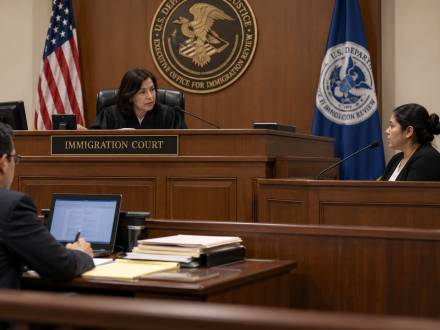
Your individual hearing is the most important day in your immigration court case. It is the day you present your evidence, tell your story under oath, and ask the immigration judge to let you stay in the United States.
For many people, the waiting is the hardest part. Some families wait years for this date. When the notice finally arrives, it is normal to feel nervous, especially if you do not know what will happen inside the courtroom.
This guide explains what an individual hearing is, how it works in Bay Area immigration courts such as the Concord Immigration Court, who will be in the room, how the hearing moves from start to finish, and what happens after the judge decides. Knowing what to expect will not change the facts of your case, but it can help you stay calm, focused, and prepared.
What Is an Individual Hearing?
An individual hearing, also called a merits hearing, is the trial in your removal case. It is where the immigration judge decides whether you qualify for the relief you applied for, such as asylum, withholding of removal, protection under the Convention Against Torture, cancellation of removal, or adjustment of status.
It is very different from a master calendar hearing. A master calendar hearing is short and procedural. The judge may see dozens of people in one morning, confirm addresses, take pleadings, and set deadlines. An individual hearing is set aside for your case alone. It often lasts two to four hours, and sometimes longer when there are several witnesses.
At the master calendar hearing, the judge mostly wants to know what you are asking for. At the individual hearing, the judge wants to know whether you have proven it.
Before the Hearing
Much of your case is won or lost before you ever walk into the courtroom. The judge will read your application and evidence before the hearing begins, so what you file matters as much as what you say.
Filing deadlines. For non-detained cases, evidence and supporting documents are generally due at least 30 days before the individual hearing, unless the judge sets a different deadline. Late evidence may not be accepted. Documents in another language must be filed with a certified English translation.
Evidence. Depending on your case, this may include your declaration, identity documents, medical or police records, letters from witnesses, country conditions reports, tax returns, school records, and proof of family relationships. Your declaration should match your application, and both should match the truth.
Preparation with your attorney. A good lawyer will meet with you before the hearing to review your testimony, explain the questions you are likely to hear, and practice cross-examination. This is not about memorizing answers. It is about making sure you are comfortable telling your story clearly and in order.
In person or by video. Some judges hold individual hearings in person, and others hold them by video through Webex. Your hearing notice tells you which. Hearing dates and locations can change, so check your case status online through the EOIR Automated Case Information Portal or by calling 1-800-898-7180 in the days before your hearing.
Who Will Be in the Courtroom
Immigration court looks less formal than many people expect. There is no jury. The people you will see are:
- The immigration judge, who runs the hearing, asks questions, and makes the decision.
- The government attorney, who represents the Department of Homeland Security (DHS) and may argue that you should be removed.
- Your attorney, who presents your case, questions you and your witnesses, and makes legal arguments.
- The interpreter, if you need one. The court provides an interpreter at no cost.
- Your witnesses, who usually wait outside until it is their turn to testify.
The entire hearing is recorded. Most hearings are open to the public, but in asylum cases you can ask the judge to close the courtroom to protect your privacy and safety.
How the Hearing Unfolds
Every judge runs a courtroom a little differently, but most individual hearings follow the same general order.
- Preliminary matters. The judge confirms who is present, reviews the evidence filed by both sides, and marks it as exhibits. The attorneys may raise objections or ask the judge to narrow the issues. Sometimes the judge and both attorneys agree on certain facts so testimony can focus on what is actually disputed.
- The oath. You will swear or affirm to tell the truth. From this point on, everything you say is testimony under oath.
- Direct examination. Your attorney asks you questions first. This is your chance to tell your story in your own words, in order, and with detail. Your attorney already knows the answers. The questions are for the judge.
- Cross-examination. The government attorney then asks you questions. These questions often test details, dates, and anything that appears inconsistent with your application or earlier statements. Cross-examination can feel uncomfortable, but it is a normal part of every hearing.
- Questions from the judge. The judge may ask questions at any point, including in the middle of your testimony. Judges often ask about the parts of the case they find most important or unclear.
- Witnesses. If you have witnesses, they testify next and go through the same process of direct examination, cross-examination, and questions from the judge.
- Closing arguments. Both attorneys explain to the judge why the law and the evidence support their position. Some judges ask for written closing arguments instead.
Credibility and Testifying Through an Interpreter
In many cases, especially asylum cases, the judge's decision turns on whether the judge believes you. Under the law, the judge looks at the totality of the circumstances. That includes how you testify, how detailed and specific your answers are, and whether your testimony matches your written application, your declaration, and anything you said to immigration officials in the past, such as at the border or in a credible fear interview.
Small differences do not automatically sink a case, but unexplained inconsistencies can. If something in your earlier paperwork is wrong, tell your attorney before the hearing so it can be addressed openly.
A few practical points help most people testify well:
- Listen to the full question before answering, and answer only what is asked.
- If you do not know or do not remember, say so. Guessing is more harmful than an honest "I do not remember."
- If you do not understand a question, ask for it to be repeated.
- Speak in short sections so the interpreter can translate accurately.
- If you do not understand the interpreter, or the interpreter speaks a different dialect, tell the judge right away. Do not wait until the hearing is over.
- Stay calm during cross-examination. The government attorney is doing a job, and a steady, truthful answer is always the strongest one.
Recent Changes You Should Know About
Immigration court has changed significantly since 2025. Two developments in particular affect how people should prepare.
Asylum cases may be decided without a full hearing. In April 2025, EOIR issued Policy Memorandum 25-28, which encourages judges to deny, or "pretermit," asylum applications that do not show legal eligibility on their face, without hearing testimony. The Board of Immigration Appeals has since approved this practice in a series of decisions, including Matter of G-R-B- (BIA 2026), which held that a judge may pretermit an asylum application even when DHS has not asked for it. This means a weak or incomplete written application can end a case before the individual hearing ever happens. Your application and declaration need to explain every element of your claim clearly, from the start.
Enforcement activity at immigration courts. ICE has detained people at or near immigration courts before and after their hearings in many cities. The rules vary by location and are being challenged in federal court, and in some places judges have limited these arrests. The law here is still unsettled. If you are worried about your safety, talk to your attorney before your hearing date. Do not simply stay home. If you miss your hearing, the judge can order you removed in your absence, and that order is very difficult to undo.
The Decision and What Comes After
Many judges announce their decision at the end of the hearing in an oral decision. Others take time to review the evidence and issue a written decision later by mail. The judge may also continue the hearing to another date if testimony is not finished.
There are generally three outcomes:
- Relief is granted. You receive the protection or status you applied for. DHS may still appeal, so ask your attorney what the next steps are.
- Relief is denied. The judge orders you removed or grants voluntary departure.
- The case is continued. The hearing is completed on a later date.
If the judge denies your case, you have the right to appeal to the Board of Immigration Appeals. The appeal must be received by the Board within 30 days of the judge's decision. This deadline is strict. While a timely appeal is pending, the removal order is generally not carried out. If an appeal is possible, your attorney should tell the judge at the end of the hearing that you are reserving your right to appeal.
Protect Yourself and Your Case
An individual hearing is a trial. The immigration judge applies federal law, the government has its own attorney, and the record made that day is the record that any appeal will rely on. Mistakes made in the application, in the evidence, or in testimony are very hard to fix later.
That is why it matters who helps you prepare. Notarios, immigration consultants, and people who are not licensed to practice law in the United States cannot represent you in immigration court, and their advice has cost many families their cases. Only a licensed attorney or an accredited representative can appear with you before the judge. You can ask any attorney which state bar has licensed them and confirm it yourself.
Courtroom experience matters just as much. Many attorneys prepare immigration applications, but far fewer stand in front of immigration judges on a regular basis. An attorney who is in court often knows how individual hearings actually run, how to prepare you for cross-examination, when to object as the record is being made, and how to argue the law to the judge in the moment. That experience also includes knowing how a particular court operates and what its judges tend to focus on. When you speak with a lawyer, ask how often they appear in immigration court and how many individual hearings they have handled.
If you have an individual hearing coming up, the best time to prepare is now, not the week before. The attorneys at Hafey & Karim Immigration Law are in immigration court every day, particularly the Concord Immigration Court, and our Concord office is less than five minutes from the courthouse. As a Bay Area immigration law firm, we represent clients in Concord, Contra Costa County, San Francisco, and throughout Northern California seeking asylum, cancellation of removal, VAWA, and other forms of relief in removal proceedings. We also represent clients in immigration court nationwide. If you would like us to review your case before your hearing, contact our office to schedule a consultation.
This article provides general information and is not legal advice. Every case is different, and immigration law and court procedures change often. Speak with a licensed immigration attorney about your specific situation.
